


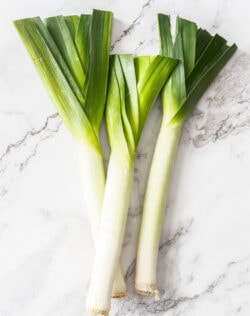
With their sweet and mild onion flavour, leeks are a delicious vegetable to use in everything from soups to quiche and so much more. A member of the onion family, they have a mild onion flavor but are much milder, and as a bonus they won’t make you cry when you cut them. While they look like jumbo spring onions (green onions / scallions) they do have a stronger flavour and the leaves are thicker so will require cooking before eating.
However, as leeks grow in layers up through the soil, they tend to catch dirt in between those layers and need so good cleaning before use is vital. Depending on how you’re using them in a recipe, will change the way you wash them so here’s all the tips you need on how to clean leeks.

Never Miss a Recipe!
Get the latest recipes straight to your inbox.
Whole or large pieces
Whole or large pieces of leek are great when roasting or braising but you must take care to clean out any bits of dirt first.
1. Cut the leek down the centre
Leaving the root intact (so that it in turn keeps the whole leek intact), slice about half way through down the length of the leek, just enough to be able to fan out the leaves.

2. Washing whole leeks
With the root pointing upwards and the green leaves pointing downwards, rinse the leek so the water runs down from the roots through the leaves, fanning it as you go so that any dirt between the layers is washed away.

3. Cut the leek
Now, trim away the dark green parts of the leek (which are very fibrous) and root end of the leek and either use whole or cut into chunks for roasting.

Sliced leeks
If you’re slicing your leeks more thinly, I prefer to take a more gentle approach to washing. Running water over the sliced leeks can rinse away flavour as well as dirt so here’s how to wash sliced leeks.
1. Trim and slice the leeks
Cut away the root and the dark green part (the pale green part is fine, but the darker parts tend to be too fibrous for eating, though great for making stock). Now, slice the leek into thin rounds.

2. Washing sliced leeks
Fill a clean basin or large bowl with cold water, and drop in your sliced leeks. Gently toss them around in the water to loosen and remove the dirt particles which will fall the to the bottom.

3. Dry the leeks
Scoop the leeks out of the water with a slotted spoon – this is better than tipping them through a strainer or colander which would just pour the dirt all over the top of them again – then place them onto a clean dry kitchen towel or paper towel. Thoroughly dry them and they’re ready to use.

How about those dark green leaves
The dark green tops of the leek tend to be a bit too fibrous to eat as while the white and very pale green parts are more tender. But, in the interests of no waste, once you cut away the leaves, you don’t need to throw them away.

They’re great for using in soups and stocks in place of or alongside onions. You can freeze these parts ready for next time you make a soup or stock. They’re lovely for making leek soup where they’ll be pureed right down. You can also turn them into pesto. If you slice them super finely, you can saute them with a little garlic and add to pasta.
The green leaves also tend to be the sandiest part of the whole leek so do make sure to wash them first, whatever you choose to use them for, to get rid of any sand.
Hungry for more?
- Subscribe via Email, Facebook, Pinterest and Instagram.
- Add Sugar Salt Magic as a Google Preferred Source.
More recipes you’ll love


This post may contain affiliate links that earn me a small commission for my referral, at no extra cost to you. Thank you for supporting Sugar Salt Magic.


