


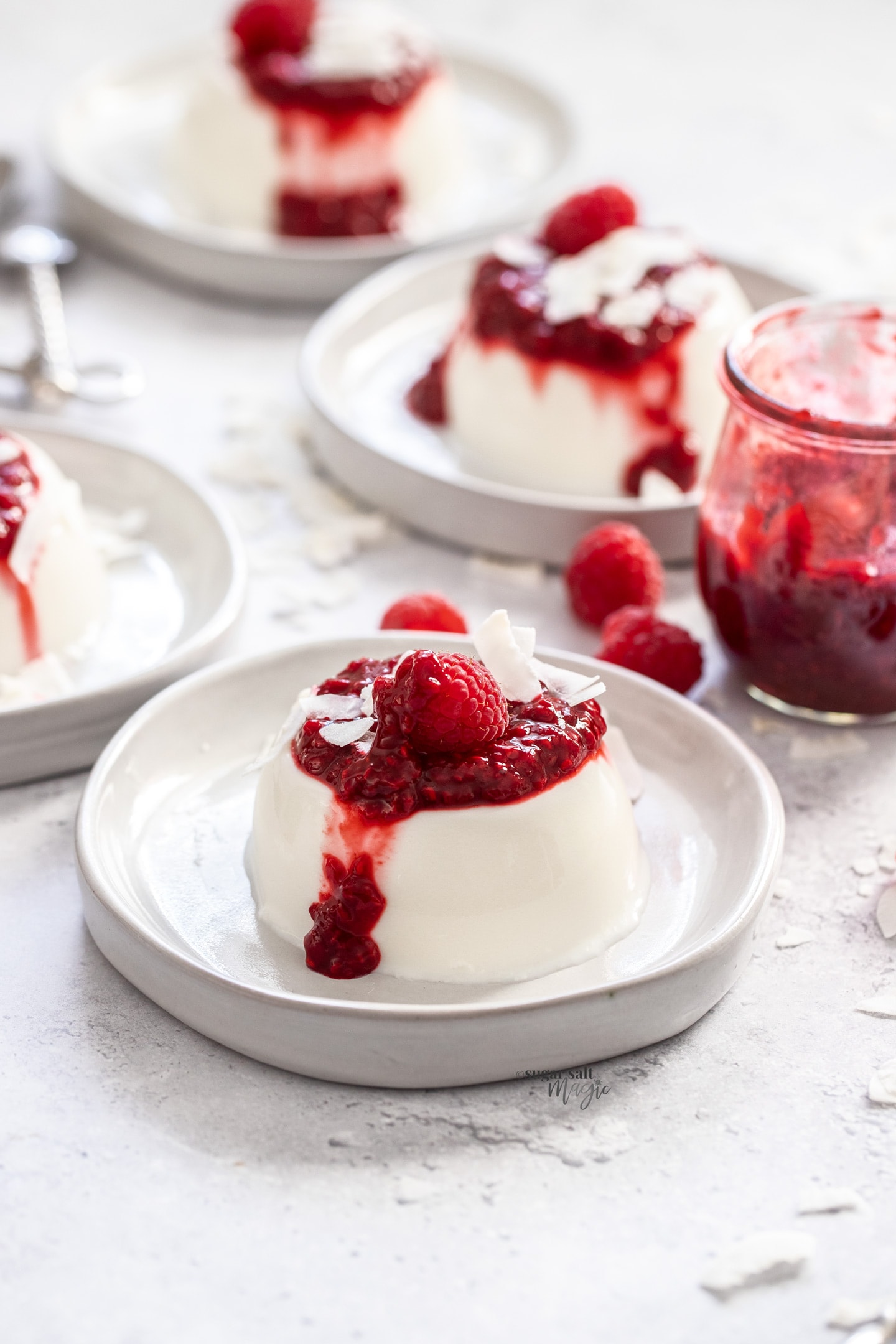
Coconut panna cotta – it’s so creamy but light all at once. It takes minutes to make too. Of all Italian desserts, panna cotta has to be one of the most elegant, yet so quick and easy. It’s a truly luxurious and elegant dessert, perfect for dinner parties but easy enough for a sweet treat any day of the week.
This coconut cream panna cotta is a tropical spin on the classic vanilla panna cotta and has a lovely tart raspberry compote topping.
❤️ Why you’ll love it
- Gluten-free and can be made dairy-free and vegan.
- Creamy and light with a velvety, silky smooth texture.
- It takes minutes to make – I promise.
- Great make ahead dessert.
- My fail-proof method so you don’t need to be intimidated by gelatine anymore.
- It’s just barely set so it’s creamy and soft but holds it’s shape with that perfect jiggle.
- Easily scalable so you can make a batch to suit any number of guests.
This recipe was first published here on April 6th, 2022 and has been updated with step by step photos.
Never Miss a Recipe!
Get the latest recipes straight to your inbox.
What is panna cotta?
Traditional Italian panna cotta is a no-bake dessert made with milk, cream, sugar and gelatine. This set dessert needs to be chilled until set before serving and has a soft, smooth, melt-in-the-mouth texture.
Numerous flavourings can be added though it’s traditionally served unmoulded (released from the mould it was set in), it can actually be served in so many more ways. See my variations below.
Ingredients in panna cotta
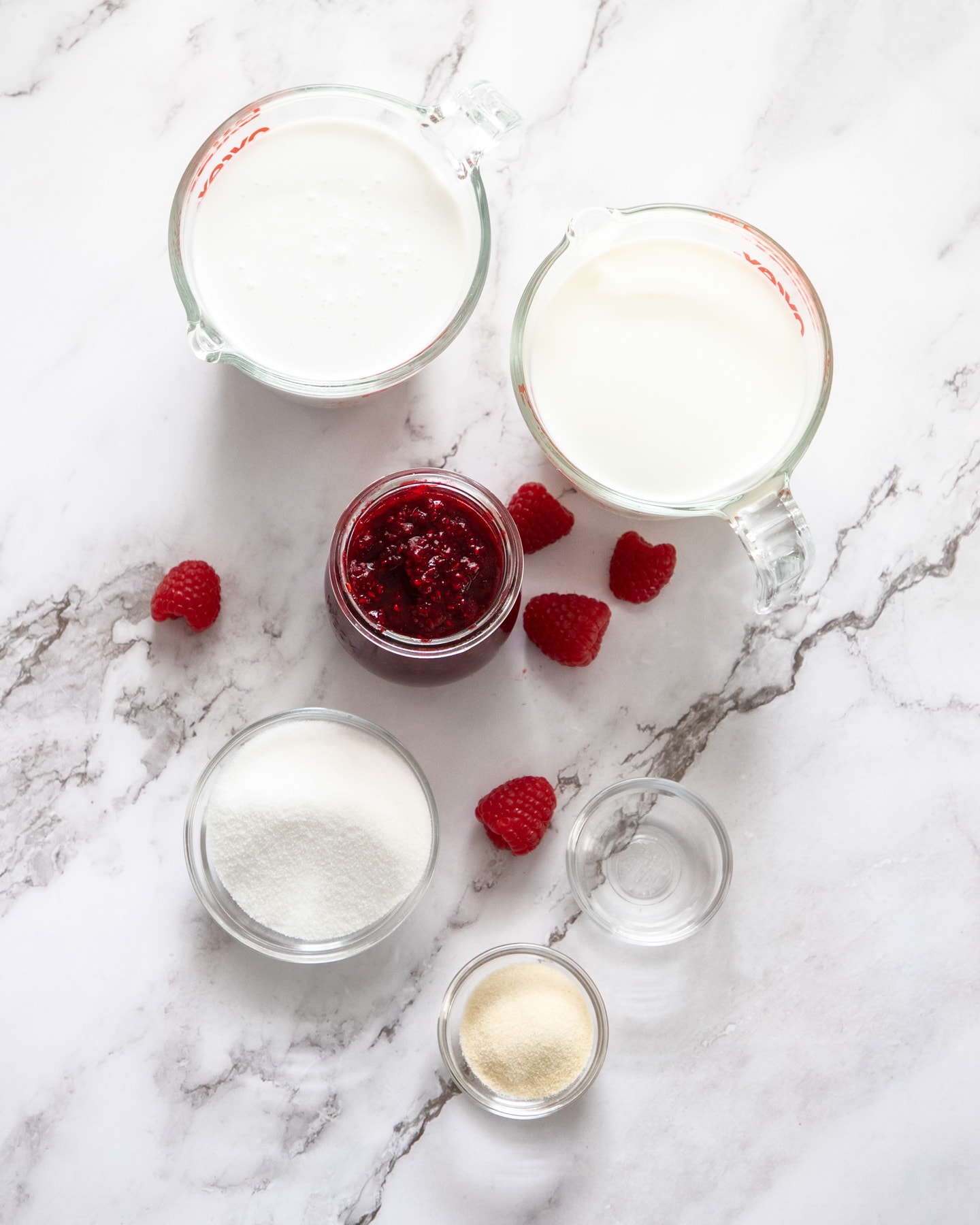
Detailed quantities and instructions in the recipe card below.
- Milk: You’ll get best results and flavour from full-cream milk. Sometimes low-fat milks will separate as the panna cotta sets, though there are some brands that seem to work fine. You can swap it for full fat coconut milk to make this dessert dairy free, however the texture isn’t as smooth. For an even richer dessert, you can swap the milk for heavy cream.
- Powdered gelatine: Don’t be intimidated by powdered gelatine. It’s very easy to use and, made this way, it works every time. Agar agar powder is a vegan setting agent but results in a different texture. I don’t use gelatine sheets so I can’t say how many or the strength you’d need.
- Sugar: Use regular white granulated sugar or caster sugar (superfine sugar) is even better as it dissolves quicker.
- Coconut cream: This is where your coconut flavour comes from for your coconut panna cotta. Use tinned full fat coconut cream and give it a good shake before you use it. For this recipe we want it all, not just the solids or liquids.
- Coconut extract: This is an optional ingredient that you might like if you want a strong coconut flavour and you’re using regular dairy milk. Leave the extract out if using coconut milk. Also, make sure to use extract and not essence. The latter is a synthetic flavouring. I don’t add any vanilla extract like I would in many desserts as it just detracts from the coconut flavour.
Dairy milk vs coconut milk
I’ve tested this panna cotta with coconut milk and with dairy milk and here are my thoughts:
- Flavour: With dairy milk, the flavour of the coconut still definitely shines through, though it is obviously more subtle than if you were to use coconut milk. You can add the coconut extract to the dairy milk version if you want the flavour to be more bold.
- Texture: Dairy milk gives a much smoother texture than coconut milk. The coconut milk version was ever so slightly grainy and doesn’t give that gorgeous smoothness panna cotta is known for.
- Ease of use: Both variations are just as easy to use though you’ll want the coconut milk to be at room temperature and give the can a good shake.
The winner in my eyes (and mouth) is definitely dairy milk. It results in a smoother coconut panna cotta with still a good coconut flavour.
How to make coconut panna cotta
Wondering how to make coconut panna cotta? It’s easier than you think. Ridiculously easy and this coconut cream panna cotta works the same way as an all-dairy version.
Detailed quantities and instructions in the recipe card below.
1. Bloom the gelatine
Sprinkle the gelatin powder over the milk in a medium saucepan and let it sit for 5 minutes to soften.

2. Heat and dissolve
Turn the heat on under the saucepan to low and stir the mixture until the gelatine dissolves. If you use a rubber spatula to stir, you’ll easily be able to see if there are any gelatine lumps left when you lift it out.
Now add the sugar and keep stirring until that dissolves too. Take it off the heat.

3. Add coconut cream
Now add the coconut cream (and extract if using it) and stir it well to combine.

4. Decant and chill
Pour the panna cotta into very lightly greased ramekins or small bowls, then chill in the fridge to set. They’ll take around 4 hours to set (or make them the night before).

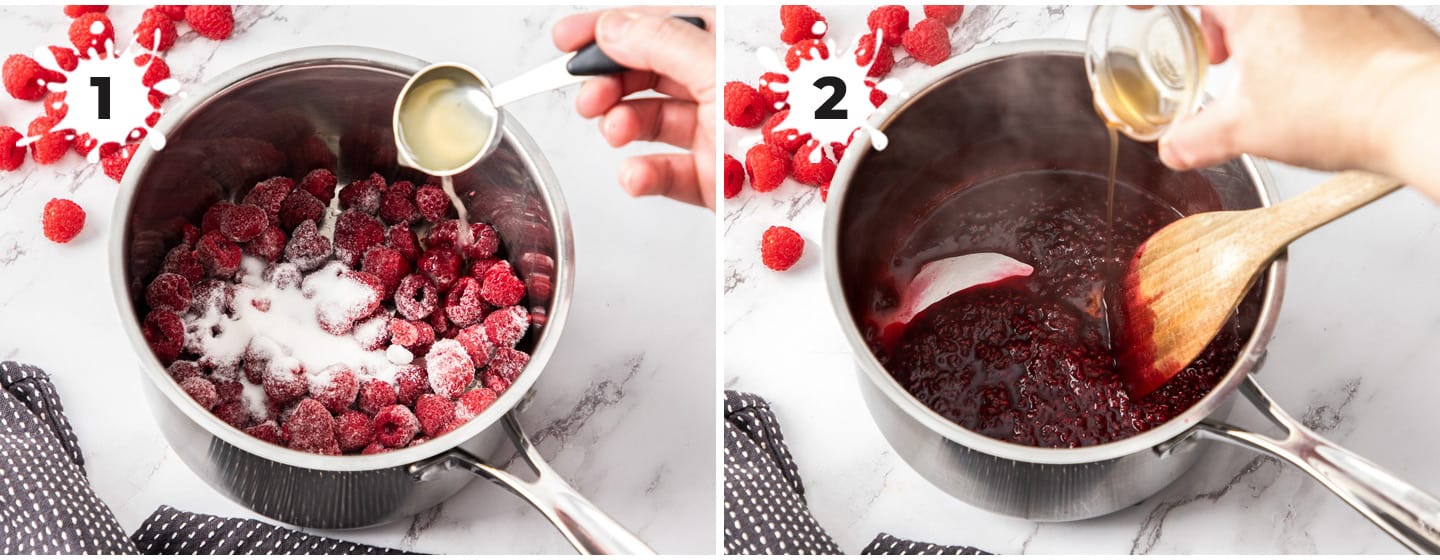
5. Make the raspberry sauce
Cook everything together in a saucepan until it’s the consistency you like. Pour into a preserving jar and chill until needed (you can make this up to 2 days ahead if stored properly).
How to serve panna cotta
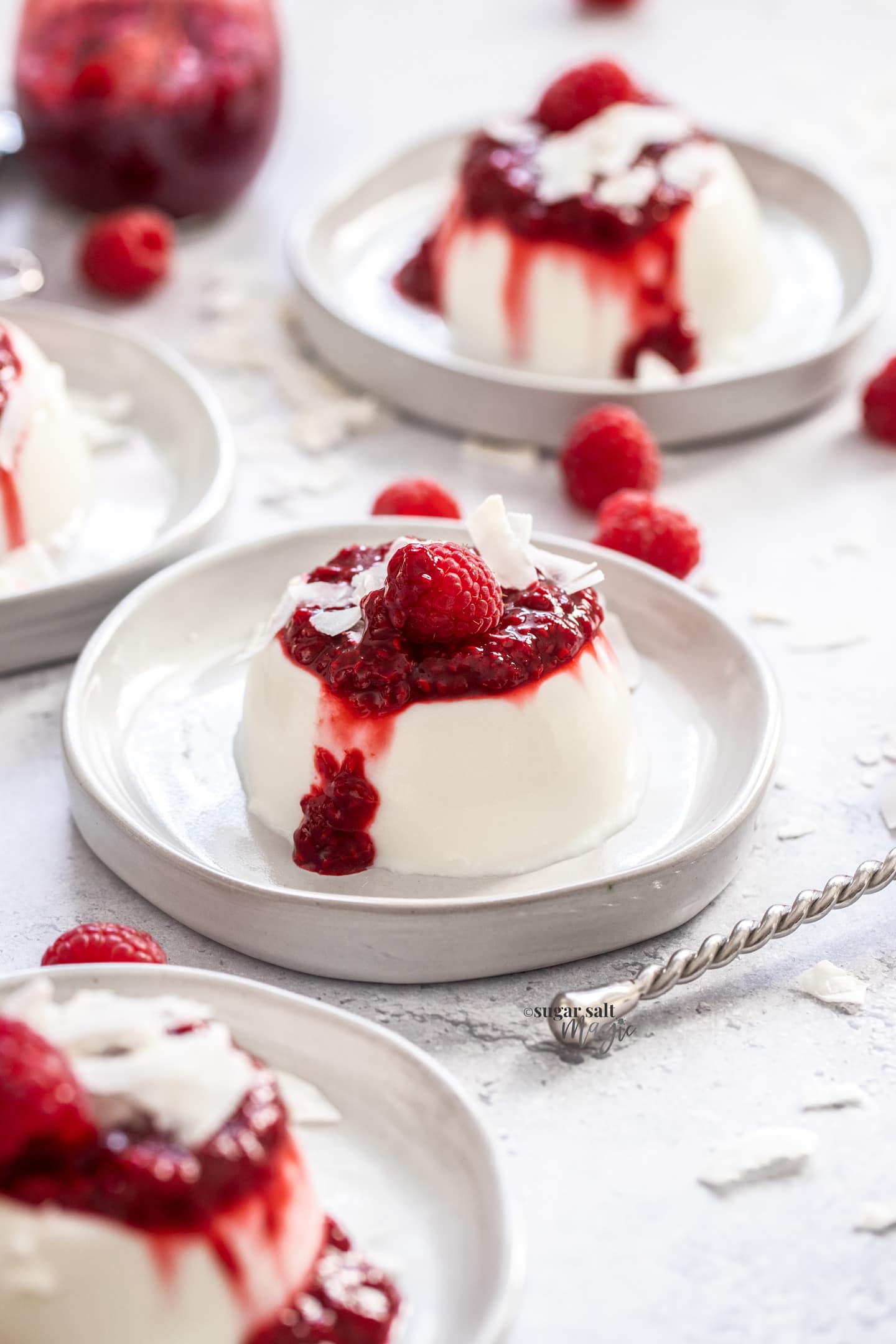
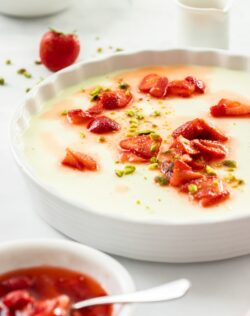
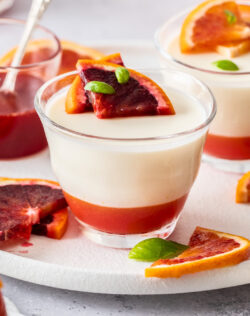
As for serving styles, you can turn it out onto a plate, the way these are. Serve it in pretty jars or glasses (like my coffee panna cotta and my boozy eggnog panna cotta). Serve it in a tart like my rose pistachio panna cotta and this fresh peach panna cotta tart or in a pie dish or baking dish (family style), like this strawberry panna cotta.
This coconut milk panna cotta is lovely served with a few toasted coconut flakes on top for texture and a little sprinkle of lime zest is beautiful too.
Tips and tricks
- Don’t overheat the mixture: Gelatine will lose it’s setting ability if it boils so make sure you’re only gently heating the mixture. It should only ever start to steam, not boil at all.
- Greasing the ramekins / moulds: If you want to turn your panna cotta out onto serving plates (as opposed to serving it up in the ramekins) make sure to grease the ramekins but only lightly. Rub a little oil all around the inside of the ramekin, then use a paper towel to wipe most of it out so you’re left with just a thin coating.
- Make it ahead: The wonderful thing about panna cotta is it can be completely made ahead. As it takes around 4 hours to set, you can certainly make it the morning of the day you want to serve but you can also make it 2 days ahead and store it in an airtight container in the fridge.
- Turning out the panna cotta: This is a light set panna cotta and I find it doesn’t need any heat applied to help to unmold it.
- First gently press around the edge with your finger until you see it come away from the side.
- Place a serving plate over the top and flip, inverting the panna cotta onto the plate. You should here a satisfying “plop” sound as it releases and drops onto the plate.
- If you don’t, just lift one edge and use your finger to carefully press one side away from the edge of the ramekin – this will allow air in, releasing the vacuum and the panna cotta will slide out. You can very gently reposition it on the plate as required.
Variations
Panna cotta is extremely versatile in regards to flavours and serving method.
There are so many panna cotta recipes to choose from on the blog. You can type panna cotta in the search bar, but my favourites are my chai panna cotta, and coffee panna cotta and this rose pistachio panna cotta tart is extremely popular because of how pretty it is.
You can even serve panna cotta as a topping on cheesecake like my coconut mango panna cotta cheesecake.
This coconut panna cotta would also be lovely served with other fruit flavours. Try this blueberry topping or pour over some passion fruit pulp. You can also use fresh strawberries or any berries you like. It would be lovely with citrus too, with segments of orange or mandarin or an orange syrup.
Troubleshooting panna cotta
💡📃Get my “at a glance” panna cotta troubleshooting guide here.
To unmold panna cotta, start by dabbing a little water on your dessert plate – this makes it easier to slide the panna cotta around to adjust it’s position on the plate. Gently press your fingertip to the edge of the panna cotta to break the seal between the dessert and the ramekin, then place your dessert plate on top and flip it all over. Give it a little jiggle and it should come out. If that isn’t working, try sitting the ramekin, in hot water about halfway up the side for a few seconds at a time until it is loose enough for you to demold.
If you’re following the recipe below, it is likely that the gelatine didn’t properly dissolve into the milk. You can reheat it gently and stir until all the gelatine has dissolved. Always make sure to bloom the gelatine for a few minutes first (step 2 in the recipe below) – don’t skip it. This softens the gelatine so that it dissolves more easily. It could also be that you overheated the gelatine. If you let it come to a boil, it can reduce it’s efficacy so you want the milk to be no more than steaming at any point.
You can swap the coconut cream for coconut milk however, you will get a slightly softer set and you won’t get as much richness.
You can swap the whole milk for coconut milk. The coconut flavour will be stronger but it tends to have a grainier texture than using the dairy whole milk. Or ideally, swap the coconut cream for heavy cream to make sure you get a similar set.
Storage
Once made, panna cotta should be stored in an airtight container in the fridge or covered tightly with plastic wrap. They can be made up to 2 days ahead.
Can panna cotta be frozen?
Unfortunately, panna cotta with coconut cream doesn’t freeze well as the texture changes completely on thawing.
⭐⭐⭐⭐⭐
Did you try this coconut panna cotta recipe?
Show it some love by leaving a rating below! It’s so helpful.
Hungry for more?
- Subscribe via Email, Facebook, Pinterest and Instagram.
- Add Sugar Salt Magic as a Google Preferred Source.

Ingredients
- 1 ½ cups whole milk (dairy) (375ml)
- 2 ½ teaspoons gelatine powder
- ⅓ cup caster sugar (superfine sugar or granulated sugar) (66g/~2¼oz)
- pinch salt
- 1 ½ cups coconut cream , room temp (375ml)
- ½ teaspoon coconut extract , optional
- 1 batch raspberry compote
For best results, always weigh ingredients where a weight is provided
Equipment
- Ramekins, preserving jars or even a pie dish
Instructions
- If you plan on turning your panna cotta out onto dessert plates, start by lightly greasing the ramekins with oil. Wipe around with a paper towel so that you’re left with just a light film of oil.
- In a small saucepan (heavy based is best) pour the milk, then sprinkle the gelatine over the top. Let it sit for 5 minutes for the gelatine to soften.
- Put the saucepan over low heat and stir continuously to dissolve the gelatine making sure to rub all around the bottom of the pan. Check it’s dissolved by taking out the spatula and checking to see if there are little clear specks of gelatine there – if there is, keep stirring.
- Once the gelatine has dissolved, add the sugar and salt and again, stir until it dissolves completely.
- Take it off the heat. Give the coconut cream a good shake before pouring it into the saucepan. Add the coconut extract too if you’re using it and stir well to combine.
- Pour the panna cotta mixture into your ramekins then sit them in a deep tray to make them easier to move around. Cover well with plastic wrap and chill for 4-6 hours until set.
- Make the raspberry sauce or you can also try this blueberry sauce.
- To turn them out, gently press around the edges of each panna cotta with your finger to release the vacuum seal. Place a dessert plate on top and flip. Give it a wiggle until you hear it “plop” down onto the plate. If it isn’t budging, just lift one side, press the edge of the panna cotta with your finger again and it should be enough to release it.
- Pour raspberry sauce on top of each one and serve.
- Please take a moment to leave a comment & rating. It's appreciated and so helpful.
Notes
- Dairy-free option: You can swap out the milk and coconut extract for coconut milk, however the texture won’t be so smooth. Still tastes lovely though and it will be dairy-free. It may also have more of a grey colour, as opposed to white.
- This panna cotta sets with a beautiful wobble but is a soft set. Don’t take it out of the fridge until ready to serve. If you are doing lots of them, place them back into the fridge once they’re on their serving plates.
- You should not require any heat to release these panna cotta from their moulds but if they’re not coming out easily by just using a fingertip to release the vacuum, just sit the bottom of the ramekins in hot water for a few seconds.
- The number of servings you get from this recipe will depend on your ramekin size. While technically (and in any of my other ramekins or molds) this recipe will make approximately 6 serves of ½ cup volume, the ramekins you see in this post made 10 as they are very small – closer to ⅓ cup.
- Stronger coconut flavor: You can taste this while still liquid, so you can add more coconut extract if you want a stronger flavour.
- Nutrition details are an estimate only – scroll below the recipe to find the full nutritional information.
FAQ’s
If your panna cotta has turned out too firm or rubbery, it is likely down to adding too much gelatine or not enough liquid. Make sure when measuring ingredients that they go all the way to the top of the measure but not over it. Use the back of a knife the level off the teaspoon for the gelatine.
If you want to swap the dairy milk for coconut milk, you can but it doesn’t turn out as smooth as using dairy milk. If you want to swap the coconut cream for coconut milk, then use heavy cream in place of the dairy milk.
Panna cotta translates to “cooked cream” however make sure you don’t overheat the milk or the gelatine may not work. Never let it boil.
No. While creme brulee is set through a combination of thickening with eggs and gentle baking, panna cotta is set purely from gelatine. It’s almost like milk jelly but softer than jelly.


This post may contain affiliate links that earn me a small commission for my referral, at no extra cost to you. Thank you for supporting Sugar Salt Magic.


2 Comments on “Coconut Panna Cotta with Raspberry Sauce”
This is a truly elegant and beautiful dessert. Needless to say, the combination of coconut and raspberries is so lovely and fresh.
Thanks so much Ben.