


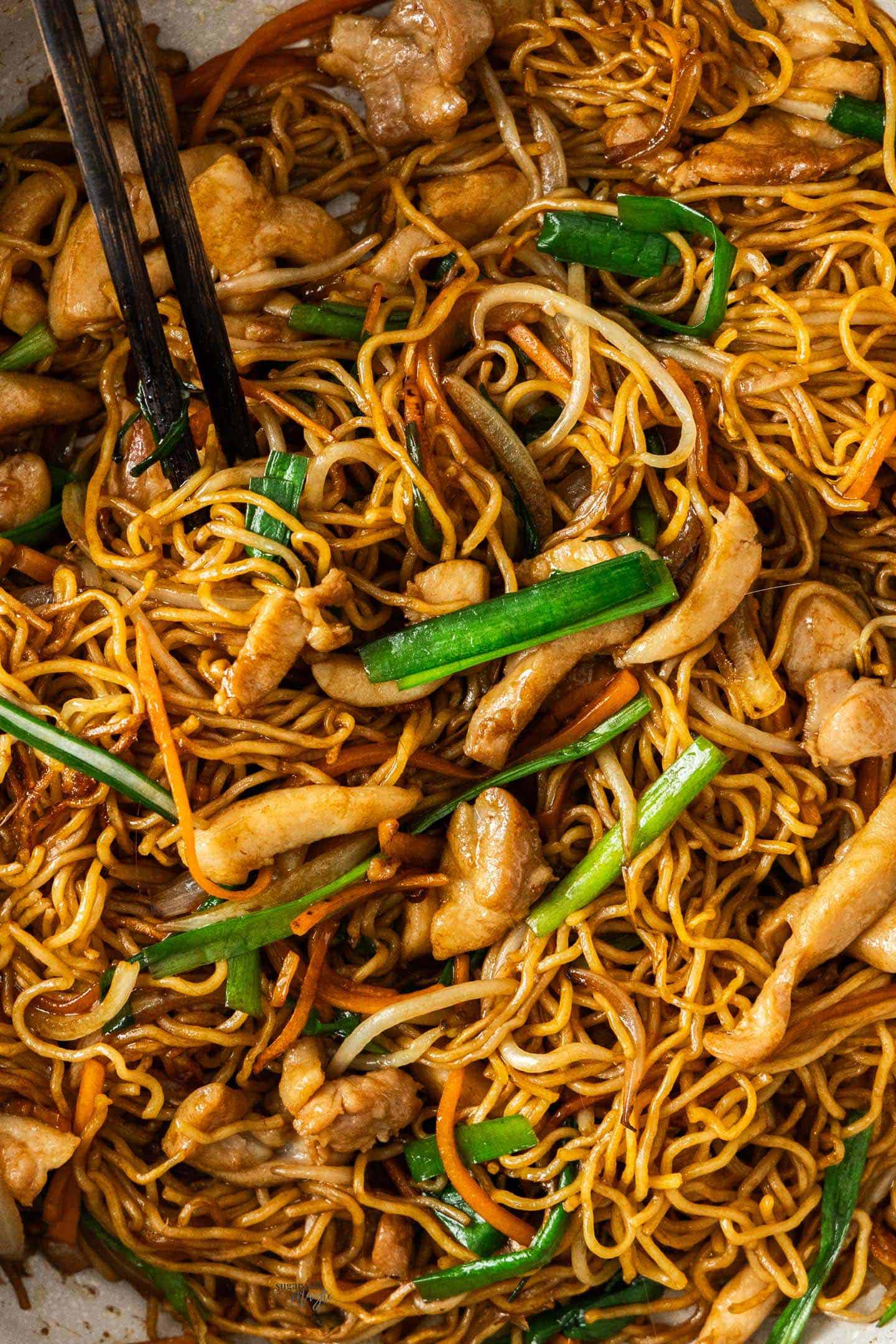
This easy Chinese chicken chow mein is a combination of delicious pan-fried noodles filled with tender chicken and crisp vegetables, all dressed in a rich and savoury chow mein sauce. And that sauce is key. Get the right ratios and this chow mein is absolutely craveworthy.
Marinating aside (which you can skip if you really want) this take on a popular Chinese noodle takeout can be made at home in less than 30 minutes. And TBH it’s so much better than your local takeout.
There’s no need for a wok either. Just a good deep non-stick skillet and your stovetop are all you need for these slurpingly good noodles. It’s also versatile meaning you can add more or less veggies and many different types and even swap out the chicken for different meats or seafood
Feel like creating your own Chinese banquet? Try this classic prawn fried rice and this crab and sweetcorn soup too.
Never Miss a Recipe!
Get the latest recipes straight to your inbox.
What is chicken chow mein?
There are a handful of different versions of chow mein, however, this is the version seen most often in Chinese takeaway. Chow mein translates to “fried noodles” and it uses pan-fried chow mein noodles (so they get a little crispy), filled with veggies and meat (often chicken) with a light sauce coating. These noodles don’t soak in the sauce; they are coated in it.
Chow mein vs lo mein
The secret to the difference between chow mein and lo mein is in the name. While chow mein translates to “fried noodles”, lo mein translates to “tossed noodles”. With chow mein, the noodles are pan-fried for a time to get a crispy texture in places while lo mein is just cooked noodles added to a sauce and tossed through.

What is in chicken chow mein?
While I’ve stuck to quite authentic ingredients in this chicken chow mein recipe, it’s so versatile that you can add or substitute so many different options. So it makes a wonderful weeknight dinner for the family since you can tailor it to your families tastes. And with the vegetables cut in a way that they are long and cling to the noodles, the kids won’t even know how many veggies they’re eating.

Jump to the recipe card for full ingredients and instructions.
- Chicken thighs have a great flavour and texture but you can get away with chicken breast if you prefer. You can even use leftover roast chicken or even roast turkey.
- Baking soda is used to tenderise the chicken.
- Vegetables: I use a combination of onion, carrot, bean sprouts and garlic chives. The latter is so good and available at Asian grocers but if you don’t have one close, there are so many other options. Try adding cabbage and some spring onions (green onions) in it’s place. Pak choy, baby spinach, green beans, sugar snap peas and mushrooms are all great options for substituting or adding in.
- The chow mein sauce is made up of flavour-packed soy sauce, dark soy sauce, oyster sauce, toasted sesame oil and just a touch of sugar.
- Fresh chow mein noodles can be found in most grocery stores and are normally labelled as chow mein noodles. They are thin and a little crinkly looking and available in the fridge section. You can also use dried noodles instead but make sure to choose thin egg noodles. The fresh noodles can freeze well so any leftovers can be stored in the freezer for another meal. With dried noodles, you’ll need to fully cook them first while fresh noodles just get a short blanch.
How to make chicken chow mein
Making chicken chow mein at home is incredibly simple. Blanch noodles, cook chicken and veggies then combine it all with a sauce. It moves quickly too so make sure all your ingredients are ready to go at the get-go.
Jump to the recipe card for full ingredients and instructions.
1. Marinate the chicken
Technically, this step is optional but it does give the chicken a wonderful tender and soft texture. It’s worth it if you have 30 minutes to let it chill.
Simply combine your sliced chicken with some soy sauce and baking soda and give it mix. Chill for 30 minutes. After this time, you must rinse the chicken well to get rid of the baking soda, then dab it dry with paper towel.

2. Make the sauce
For this step, just combine the sauce ingredients in a small bowl and set aside.

3. Prep everything (takes just a few minutes)
Before you start, make sure all your veggies are cut to size. If using fresh noodles, blanch them in boiling water for a minute and if using dried noodles cook them according to packet instructions. Drain the noodles and lay them out on a plate to air dry.
4. Cook the chicken
First up, I recommend using a non-stick pan for this recipe. The noodles will stick quite easily if you pan is not non-stick or at the very least well seasoned.
Add a little oil to the pan, then cook the chicken just enough to seal it all over, then set it aside on a plate.

5. Cook the veggies
Start by cooking the onion and carrot together for a minute. Add the bean sprouts and cook them for 30-60 seconds depending on how crunchy you like them. Finally, add the garlic chives and cook for 30 seconds. Set the veggies aside.
If you’re using cabbage or pak choy, add that with the bean sprouts. If using spring onions or spinach, add it when you would normally add the garlic chives. The thicker a vegetable the sooner you should add it. I would add beans or snap peas at the same time as the onion, for instance.

6. Cook the noodles
Once your noodles have been drained and look dry, add them to the pan with some oil and let them cook undisturbed for 2 minutes so they start to brown and crisp underneath.

Flip the noodles over as best you can, then top with the chicken and cook for another 2 minutes.

7. Bring it all together
Now add the vegetables and give it all a good toss to combine.

Finally, stir in the sauce and toss to coat the noodles well. Make sure it’s hot through and the chicken is cooked through and serve immediately.

Variations
This chicken chow mein is such a versatile recipe. You don’t need to run out to an Asian grocer for garlic chives if you don’t feel like it and if there’s anything you don’t like you can very easily swap it.
- Protein: You can use pre-cooked chicken from a roast chicken or rotisserie chicken or you could even use your leftover turkey from thanksgiving or Christmas. For something other than chicken, try using duck, beef, pork or prawns/shrimp. For a vegetarian option, try tofu.
- Vegetables: Try any of these alongside or in place of the vegetables in the recipe. Cabbage, spring onions (green onions), bok choy, pak choy, baby spinach, bell peppers, green beans, sugar snap peas and mushrooms are all great options for substituting or adding in. The larger or thicker a vegetable the longer it would need to cook.

⭐⭐⭐⭐⭐
Did you try this recipe for chicken chow mein? Show it some love in the comments below.
Hungry for more?
- Subscribe via Email, Facebook, Pinterest and Instagram.
- Add Sugar Salt Magic as a Google Preferred Source.

Video
Ingredients
- 2 boneless skinless chicken thighs thinly slice
- 2 teaspoons light soy sauce
- ½ teaspoon baking soda
- 2 ½ tablespoons peanut oil (notes 3)
- ½ medium brown onion sliced
- 1 small carrot julienned, (~¾ cup)
- 1 ½ cups bean sprouts (85g/3oz)
- ¾ cup garlic chives sliced into 2 inch pieces (bunch about 1 inch thick) (45g / 2 ½ oz)
- 250 g fresh chow mein noodles (~9oz) (notes 2)
- ¼ teaspoon cooking sea salt / kosher salt
FOR THE CHOW MEIN SAUCE
- 1 tablespoon light soy sauce (4tsp, notes 1)
- 1 tablespoon dark soy sauce (4tsp, notes 1)
- 1 tablespoon oyster sauce (4tsp, notes 1)
- 1 teaspoon sesame oil
- ½ teaspoon sugar
For best results, always weigh ingredients where a weight is provided
Equipment
- Large, deep non-stick skillet / pan
Instructions
- Combine the chicken, 2 teaspoons of soy sauce and baking soda in a bowl. Mix well, then chill for 30 minutes.
- Have a timer ready for the cooking portion of this recipe.
- Bring a medium pot, half filled with water to a boil. Add the noodles and cook for just 1 minute. Use chopsticks or a couple of forks to separate the strands a little.
- Drain the noodles and toss a few times so the steam evaporates and they’re no longer wet looking. Set aside.
- Make sure to have all your vegetables prepared before you start as this recipe moves quickly from this point.
- Combine sauce ingredients in a small bowl and set aside.
- Rinse the chicken well and pat dry with paper towel.
- Add 1 tablespoon of oil to a wok or non-stick frying pan / skillet over medium-high heat. Add the chicken and cook, stirring 3-4 minutes until sealed all over. Set aside on a plate.
- Add another ½ tablespoon of oil to the pan. Tossing and stirring constantly, add the onion and carrot and cook for 1 minute. Add the bean sprouts and cook for 1 minute. Add the garlic chives and salt and cook for 30 seconds.
- Set aside on a separate plate to the chicken.
- Now add the remaining 1 tablespoon of oil. Add the noodles and spread them out in an even layer over the base of the pan. Cook for 2 minutes, undisturbed then flip over as best you can – they should be golden brown in places. Top with the chicken and cook for a further 2 minutes undisturbed.
- Add the vegetables and salt and give it all a good toss together.
- Add half the sauce and stir through, followed by the remaining sauce stirring and tossing just until fully coated and hot all the way through.
- Please take a moment to leave a comment & rating. It's appreciated and so helpful.
Notes
- Tablespoons: I use a standard Australian 20ml tablespoon (equal to 4 teaspoons). Check yours before measuring.
- You can use dried, fresh / instant chow mein noodles. Cook them according to the packet instructions, but just 1 minute short of what the package suggests as they’ll cook further in the pan.
- If you have a peanut allergy or don’t have peanut oil, just use a neutral flavoured vegetable oil like sunflower oil.
- Nutrition details are approximate only – scroll below the recipe to find the full nutritional information.
FAQs
Chow mein translates to fried noodles so it’s a dish of noodles and vegetables, that are fried together to a point where the noodles get crispy in places. Chow mein has a light coating of sauce rather than sitting in a thick sauce.
The noodles! The noodles are fried in a little oil until they become golden brown and crispy.
Chow mein and lo mein are similar in that they are both noodle dishes with vegetables and meat. The changes are in the amount of sauce and in the method of frying. In lo mein, the noodles are cooked in the sauce, rather than being fried until crisp and it tends to have more sauce.
This post may contain affiliate links that earn me a small commission for my referral, at no extra cost to you. Thank you for supporting Sugar Salt Magic.


6 Comments on “Chicken Chow Mein”
Hi there, Thankyou for yet another wonderful recipe!
May I ask, does one serve this alone or are there accompaniments that you would suggest? I feel that it’s a lone dish but I thought I would ask.
Many thanks
Christina
So happy you love it, Christina. It can be served alone and that’s how I’ve always eaten it, however feel free to add a side salad (this spicy cucumber salad will keep things in the Asian flavour realm) or add a few sides and turn it into a Chinese banquet.
What brand is that beautiful white pan that you’re using?
Hello Jodie. I love this one too. It’s a Smith + Nobel (the white granite 28cm low casserole pan).
Making this tonight instead of getting takeout!
Can’t wait to hear how you love it, Ritika.